Thursday, March 26, 2015

Firefly, the Ultimate Space Western


     I'm just going to get it out of the way, and state that I absolutely love Firefly. So, it will come to no surprise, that I chose to rewatch all of it, rekindling my love, for this week. However, it was good for me, because this time around I was studying it more thoroughly than I ever did in the past.

     Wikipedia defines Space Opera as "a subgenre of science fiction that often emphasizes romantic, often melodramatic adventure, set mainly or entirely in outer space, usually involving conflict between opponents possessing advanced abilities, weapons, and other technology."

     While Firefly does fit under the category of Space Opera, it also is more related to Space Western. The western themes are undeniable, with shootouts in every episode and the theme including the ship flying over a herd of cattle. I love that they are able to take a an old genre like the western and revamp it with mixing it with science fiction. Not only are they revamping the genre, but they are also exploring themes in ways that they werent explored due to the stigma's of the times.

     I think the foremost example of this in shown in the role of "Companions" in this world and the role that Inara plays on the show. In westerns and today, escorts or prostitutes are regarded poorly and have no respect. However, Whedon turns this around in Firefly by the use of Companions. A Companion is a skilled, well-educated member of a guild of professional courtesans/entertainers. It is somewhat of a state sanctioned prostitution, however, these girls are treated with utmost respect by everyone. It is mentioned multiple times that many are surprised that a ship as lowly as their Firefly has a respectable Companion on board.


     I love how the flexibility of this genre allows for old themes to be revisited and recreated so that it reflects society today, or even shows advances that may be possible in the near future. These advances dont have to be solely technological, but culturally as well.

Mythic Fiction and Contemporary Urban Fantasy

     Last blog post, I talked about the fantasy genre and the appeal of fantasy to viewers. I namely spoke of my own experiences and the escapism that can be found in these creative books. Mythic Fiction and Contemporary Urban Fantasy are subgenres of fantasy that make escapism much easier(this might explain why it is so popular with the young adult fiction demographic). This type of fantasy introduces fantastical elements into the "normal" life of a character. This allows the reader to clearly imagine that something very much like that could happen to themselves. It creates a more immersive story for the reader.


     Personally, one of my favorite examples of this genre(besides Harry Potter), is the Percy Jackson series. I started these books in the 5th grade, and waited for a new book to come out every year since. I loved the constant adventure and humor that could be found, but most importantly, I enjoyed thinking about the world as if it was not only plausible, but real. Rick Riordan managed to make Greek myths contemporary and relevant to the Untied States. When I went to New York City on a field trip in the 6th grade, I looked about the Empire State Building imagining that it was the entrance to Olympus.

     As mentioned before, this type of fantasy can be found in the most popular young adult books. Off of the top of my head I can bring up four extremely successful series that make use of contemporary urban fantasy (Harry Potter, Percy Jackson, Twilight,and Mortal Instruments). I thought it would be a fun exercise to explore this trend. So, I went to the website of the Young Adult Library Service (http://www.ala.org/yalsa/2015-best-fiction-young-adults), and looked up the best young adult fiction books for this year. Here are some that I found right away.

The Accidental Highwayman. By Ben Tripp. Tor, $17.99 (9780765335494). After being mistaken for his master, the notorious highwayman Whistling Jack, Kit Bristol and his horse Midnight are thrown into a world of magic they thought only existed in fairy tales.

Evil Librarian. By Michelle Knudsen. Candlewick, $16.99 (9780763660383). Think librarians are a yawn? Then you haven’t met Mr. Gabriel, the new librarian at Cynthia’s school. He’s not dull; he’s a demon!
Glory O’Brien’s History of the Future. By A. S. King. Little, Brown, $18.00 (9780316222723). Beware of drinking liquefied bats! Glory O’Brien does and suddenly finds she can see the past and future of everyone she encounters. Everyone except herself. What does her future hold?

Thursday, February 26, 2015

The Fantastical Escape

    The reading for this week suggested The Hobbit, and it made me feel very nostalgic. I read The Hobbit when I was 12(like my brother and sister) and I was in love with the book. I enjoyed the adventure and the message. Even before that age, I loved reading books, especially fantasy. I read (and fell in love with) Eragon in the 5th grade as well as Ender’s Game, Sabriel, The Chronicles of Narnia and books of the like. In fact, the only time I ever played hooky was in the 5th grade when I pretended to have a stomach ache so I could stay home and read Percy Jackson. Re-reading The Hobbit brought back all of these memories and made me think about the reasons that we read fantasy books.

    I think the most common reason (and the one I definitely have) is that fantasy is a way to escape reality. Reading epic novels allow the reader to leave a monotonous life behind and live in a fantastical world where anything can happen, literally. There are no rules when it comes to fantasy, anything goes. This stretches our imagination to the limit, using the creative side of our brains which, depending, may not be used frequently in daily life. The reader gets to explore other worlds, lives, and creatures. It just made everything more exciting. I was able to set aside my life and delve into the world of these characters. I also think that the draw comes because it is so different from real life. There is no way to confuse fantasy with reality. It creates a complete escape with no reminders of the real world.

    Although I haven’t been reading much since I got to college, re-reading The Hobbit has rekindled my love, reminding me of why I was always so engrossed in these books. While they provide an escape, the most important thing is that they were fun. It’s fun to delve into a new world and experience things you may never experience in this life.


At least these pugs are more relevant than last weeks' puppies. 

Wednesday, February 25, 2015

Witches and Power Struggles

    This week I read Aunt Maria by Diana Wynne Jones and it brought up multiple thoughts about witches as depicted in this tale as well as witches in general. Typically, I feel like witches are divided into good and evil and it is highly unusual for there to be much moral grey area for them. This is perfectly demonstrated in The Wizard of Oz. There is Glenda the Good Witch (it is literally in her title) who helps our heroine, and there is the Wicked Witch of the West who is the evil our heroine must defeat to go home. However, recently, there have been examples of people breaking that barrier, such as the book Wicked. Wicked takes the Wicked Witch of the West and shows all of her story. It details why she acts the way she does and it also shows that it is not just black and white.

    Aunt Maria is interesting because there is an evil witch, however, she does not recognize that she is evil. When asked at the end of the novel, Aunt Maria doesn’t think she has done anything wrong by controlling the entire town and turning people into animals. She feels as if she is just in every one of her actions.
    This book is also interesting because the entire time there is a power struggle and a misuse of power. Aunt Maria has sealed the men’s power and they are basically zombies that the women order around. They use their power to gain the upper hand over the men and to exploit them. The only way to change this is to get their power back. Basically, Jones is manifesting the power struggle between men and women today into an easy to read book. Although it is the 21st century, there are still gender equality issues that happen throughout the world. Jones recognizes that and depicts it through the intense power struggle between both sides. She ends the book in the way that she believes can solve this problem. Antony Green, once he is freed and receives his power, releases it to everyone instead of perpetuating the cycle and using it to rule over the women. This way, no one has the upper hand on the other and there is no fighting.


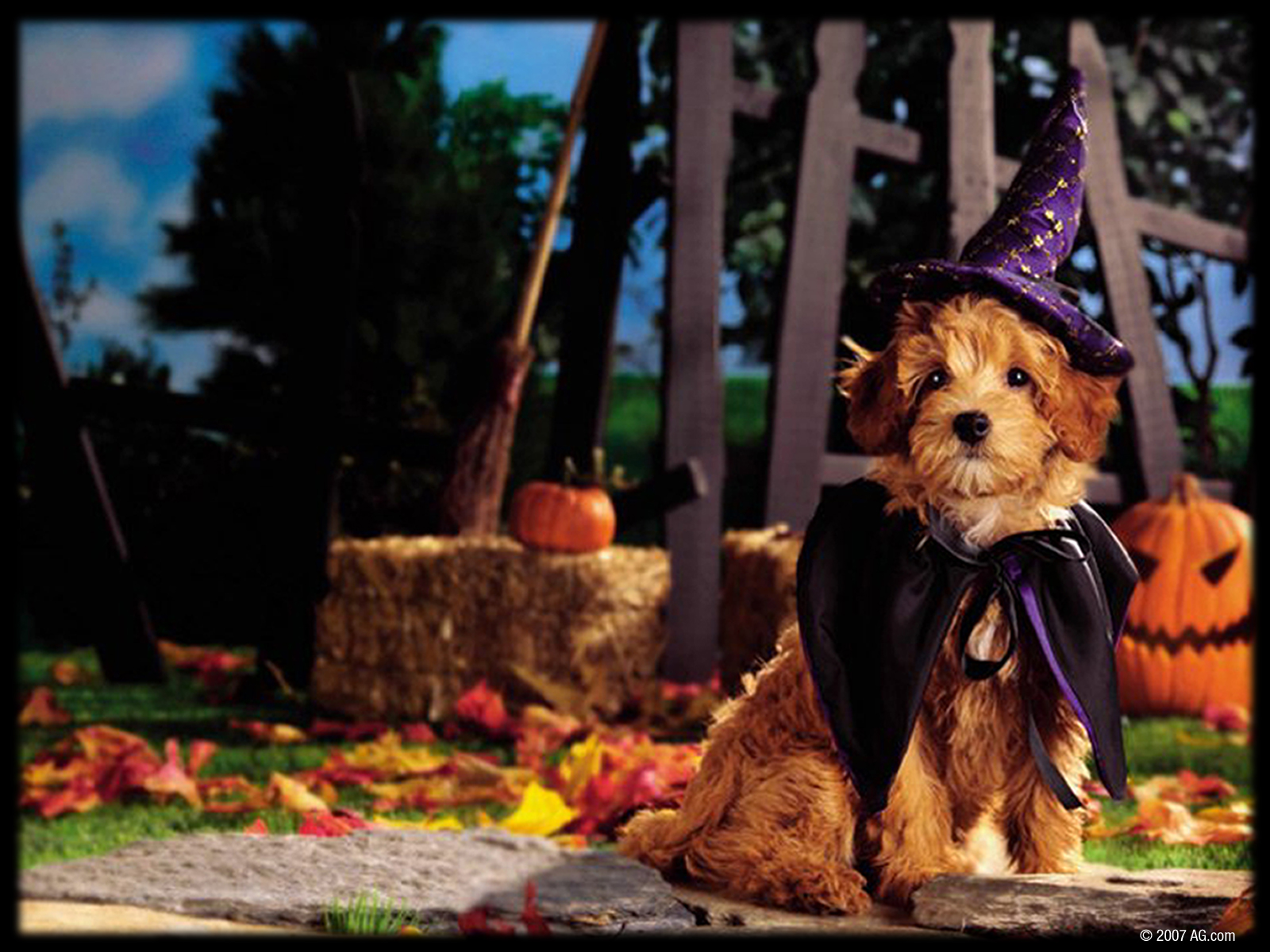
Witch puppy is the best puppy?

The Definition of Weird and Cabin in the Woods

    Weird. Weird is a hard word to define. Dictionary.com believes that weird is an adjective that means, “involving or suggesting the supernatural; unearthly or uncanny”. It could also mean “fantastic, bizarre”, or (archaically) it means “concerned with or controlling fate or destiny. However, whenever that word is used today, it doesn’t seem to quite fit any of these definitions. The “new weird” is no exception.
     My teacher defined the new weird as a work in horror that has larger intents. It is more than formulaic; in fact, it uses the formula to say something bigger. One of the most poignant examples of this is the movie Cabin in the Woods. (And no, this is not because I think Joss Whedon is a god)
     For the length of the entire movie, the characters are trying to create the most stereotypical “horror movie scenario”. You see that they make a living out of it, forcing the unsuspecting teens to fulfill all of the clichés. In this way, the characters are trying to create the formulaic horror movie. The “something bigger” comes with the why. Why are they creating this cliché? It is to appease the Ancient Ones. The beings from below who will destroy the entire earth if humans do not sacrifice other humans. The best part is the end. They fail to meet the Ancient Ones’ expectations and the entire earth is destroyed.

     Let’s look a little deeper. This movie does a wonderful job making fun at the horror genre, while still technically being within it. It also serves as a poignant message to stop the horror movie clichés. The “Ancient Ones” actually represent the audience. The audience wants all of the typical horror movie stereotypes, and if these are fulfilled, we are pleased. However, the audience becomes angry if these conditions are not met and will trash the film because of this. Joss Whedon and Drew Goddard are trying to tell audiences that we need do away with all of the stereotypes and look for new, fresh takes on horror.


Again, hard to find a puppy for this subject so enjoy this completely unrelated photo.


"Western" Horror vs. J-Horror

  I never had much experience with Japanese horror beyond being terrified by the commercial for The Grudge and the plethora of anime that I’ve watched. I was very surprised to read Kwaiden by Lafcadio Hearn and discover that it isn’t how I’ve typically seen horror the way the western world sees horror. While reading, I noticed that it was more of a parable, with a lesson to be learned  as opposed to a scary story. I was constantly expecting the character to die in a gruesome way and I was repeatedly surprised whenever the story ended.  It makes me wonder what would happen if they attempted the horror the western way, or if we attempted horror their way.
    Western horror is very focused on scaring and creating nightmares. It usually includes a monster/creature and a lot of death. I think one of the main ideas is a loss of control. When faced with these nightmarish creatures, the characters face an extreme loss of control over their life. The only way to survive, is to somehow regain that control and defeat the monster. Whereas Japanese horror, as I mentioned before, seems to concentrate on the consequences of ones actions.

    I feel as a good example of this is the story “Oshidori” that can be read in Kwaiden. In “Oshidori” the main character, Sonjo, is a hunter and a falconer. On his way home, Sonjo killed a male duck who was swimming with his female mate. He did this although it was said not to be good because he was hungry. He later dreams of a woman asking him why he killed her mate and “you do not know-you cannot know what you have done! But tomorrow, when you go to Akanuma, you will see,-you will see” . At this point, I’m thinking that the female duck put a curse on him, that he is going to die somehow in a horrible way. However, the next day when he goes to Akanuma, he witnesses the female duck tearing open her body and dying in front of him. At this point, I was surprised but I still thought that something dramatic was going to happen. However, there is only one line left in the story…
    “Sonjo shaved his head, and became a priest.”
Not exactly the gruesome end I was expecting (unless becoming a priest is as scary of a prospect as dying).
    Now, examining something as simple as the differences between these two interpretations of genre can really show the differences in our cultures. A lot of the stories in the Kwaiden dealt with preserving and respecting nature. It also creates a punishment for not doing this and it serves more as a warning. In comparison, western horror is more about the thrill, the adrenaline rush gained by being scared.


I couldn't find a picture of a puppy to go with J-Horror, so enjoy this puppy in a jack-o-lantern.